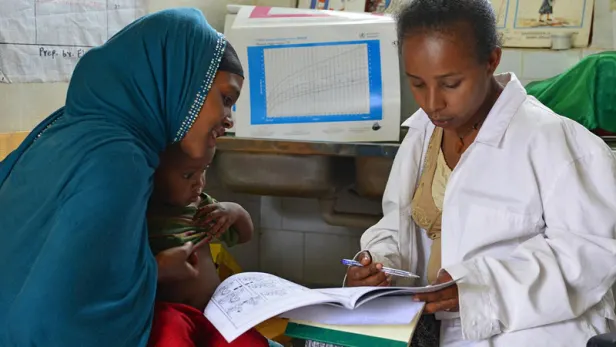
A health extension worker counselling a mother on best nutrition practices. Photo by: Nesbitt /  UNICEF Ethiopia / CC BY-NC-ND

Pandemics, resistant bacteria and other infectious disease pose some of the greatest threats to national borders, people and economies. The risks are global, so our resilience and preparedness not only depend on our own country’s health systems, but on the least common denominator of health systems around the world. This is why a physician in Manhattan was diagnosed with Ebola contracted in West Africa; a woman in Reno died of a resistant bacteria from India; and thousands in the United States contracted Zika, a virus that spread from Brazil across the Americas.

Perhaps the most ideal mechanism to address global preparedness and response to such public health threats is through the World Health Organization, the United Nations agency with a 194-country membership charged with safeguarding the health of the world’s population.

The WHO’s Executive Board just announced the three finalists in the running for director-general: David Nabarro, Sania Nishtar and Tedros Adhanom Ghebreyesus. While news about this critical upcoming election may be overshadowed by media coverage of executive actions and bombasting, it offers one of the greatest levers to impact the health of the world’s population and is as headline-deserving a topic as any.

In the current context of what the WHO needs the most, Tedros Adhanom Ghebreyesus, former health and foreign affairs minister of Ethiopia, is the most qualified for the role. Over the past 30 years, he has led health systems in his home country of Ethiopia and chaired the board of the Global Fund to fight AIDS, Tuberculosis and Malaria, one of the largest coffers for global health financing.

Tedros’ suitability for director-general rests is his irrefutable ability to create and build efficient and sustainable health systems, the linchpin of health care delivery. Under his leadership, Ethiopia has made such dramatic improvements in public health outcomes that it is often heralded as a model for health care delivery in low- and middle-income countries. During his tenure, Ethiopia trained and deployed nearly 40,000 health extension workers — mostly women — to the most remote and hardest-to-reach parts of the country to provide basic health care services. Evidence suggests that his interventions have led to precipitous declines in rates of infant mortality to levels that even countries with far more resources have not been able to achieve.

While Ethiopia had previously grappled with one of the greatest doctor shortages in the world, under Tedros’ leadership, the country opened 13 new medical schools, dramatically increasing the number of graduating doctors in the country. When there were concerns or critiques about how this may lead to decrease in quality of medical education, Tedros created new partnership models to pair the new Ethiopian schools with leading U.S. and European institutions for faculty career development, curriculum enhancements, and capacity building for locally relevant research.

Both of us have seen firsthand at the University of Michigan how such partnerships are creating high-quality, highly motivated medical doctors and researchers in Ethiopia.

Of course there is also a political element to the role of director-general. Tedros has witnessed firsthand that the real challenge for the WHO — and for mproving health of populations around the world — is not a lack of new ideas and innovative concepts. It will need serious commitment of resources — both in terms of financial and political capital, and also strong implementation. With more than 80 percent of its money coming from voluntary contributions earmarked for specific programs, the WHO has little fungibility or budgetary flexibility to act on emergent health issues.

Tedros has been the health minister of a resource-poor country where, quite often, multiple aid agencies work with their own specific — and sometimes conflicting — goals, implemented through fragmented delivery architecture. In Ethiopia, Tedros was able to convince government and private financiers that the overall system benefits when they let the country government act as a single point of control and coordination. Of all the candidates, he would be the most capable at negotiating enhanced core contributions from member states. His pragmatic and implementation-oriented managerial style and his political experience stand the best chance of convincing WHO member states to increase contributions to create a well-functioning WHO.

Over time, the WHO has burdened its scarce technical and resource capacity in managing a whole gamut of activities, extending it into areas that would probably belong in the mandate of other global and regional agencies. Tedros knows how to focus an organization on its core and central function. His counterparts in developing countries, especially in sub-Saharan Africa, have also made him realize that it will be extremely important to balance international rule setting and normative policy while also allowing space for countries to determine their own policy around pressing health issues. Striking such a balance requires someone who is an insider to the club of developing country health ministers.

This election may well represent a watershed moment in the architecture of global health governance. The WHO urgently needs a leader to repair its deficit in finances and credibility.  Fractured and under-resourced health systems are in need of fortification to not only project those within their own borders but also to build resilience against the rise of transnational threats to public health. Tedros is the candidate to do both, and it would be in all of our best interest to elect him.

Stay tuned for more opinion pieces on the three director-general candidates and the role of the WHO under new leadership in May 2017, and read Devex’s exclusive look at the stakes behind the vote.


About the authors

Prashant Yadav

Prashant Yadav is a senior fellow at the William Davidson Institute at the University of Michigan and a visiting scholar at the Harvard Medical School.

Akash Goel

Akash Goel is a physician and journalist. He is a World Economic Forum Global Shaper.


Subscribe to Devex Newswire
Top international development headlines emailed to you every day


Discussion Highlights

Join the discussion on this article


Devex is the media platform for the global development community. A social enterprise, we connect and inform 850,000+ development, health, humanitarian, and sustainability professionals through news, business intelligence, and funding & career opportunities so you can do more good for more people.

READ MORE

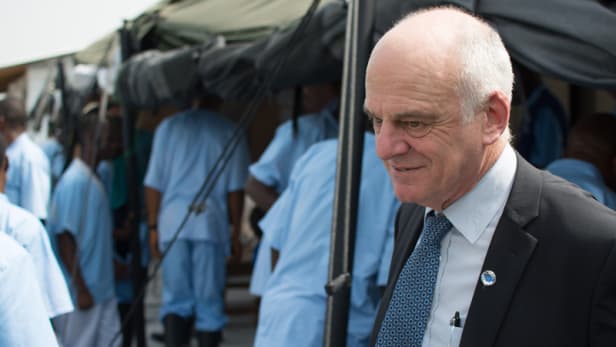
Dr. David Nabarro, candidate in the race for World Health Organization director-general. Photo by: Simon Ruf / UNMEER / CC BY-ND

We live in a world that is constantly changing. It has changed more in the past 100 years than it did in the previous thousand. An uneven climate, novel diets and new ways of communicating all impact on our lifestyles. Amid these changes, our health is a precious asset and we must preserve it carefully. For many people — especially those who are poor, vulnerable and living amid conflict — maintaining good health is a constant challenge.

For these and many other reasons, the World Health Organization is vitally important to all of us.

We need the WHO as we try to understand risks to our health. We need the WHO to help us respond to threats of disease when they appear. We need the WHO’s advice when deciding how best to make sure that those who need health care can get it. Because patterns of sickness and disease vary from place to place, the WHO has to be nimble when deciding which issues need its attention. That calls for effective leadership — and it is needed now more than ever.

If elected as director-general of the WHO, I will prioritize the building of capacity within countries: Poor countries will receive the support they need to protect their people and to keep them safe. I will ensure that the worldwide response system will function well, responding impartially to people’s needs, with dependable support systems in each region.

I will upgrade its response to disease outbreaks, as a matter of urgency. I know what is required after leading international responses to malaria, avian influenza, Ebola and cholera. The WHO was criticized for a delayed response to the 2014 outbreak of Ebola disease. Yet as the premier health body of our world — owned by all countries and serving the needs of all people — it must strive both to be relevant and effective, at all times. I have set out what needs to be modified in the wake of the Ebola response. I know what is needed and am ready to make it happen.

A relevant and effective WHO will help close the health gap by identifying inequalities in people’s health experiences and ensuring they are overcome. I have seen the impact of unequal access to health care with my own eyes because I have treated the sick in many countries. Most people in today’s world get sick and die because they get diseases that are linked to the ways they live. The WHO’s principle role is to show how diet, exercise, water, sanitation, education, conflict, the environment and human rights all influence how long people live and how healthy they are. That is why I work for public health through primary health care, leaving no one behind.

Often many health challenges people face can be prevented by ensuring early access to the factors that determine well-being. Why should anyone have to die of an illness that can easily be treated? Why should people anywhere be sick when prevention is inexpensive? In September 2015 our world agreed to a plan to ensure the well-being of all people and nurturing of the planet. If that plan — the 2030 Agenda for Sustainable Development — is fully implemented, people everywhere will enjoy good health.

I want the WHO to be at the heart of efforts to implement the 2030 Agenda, supporting the many governments across our world who are working to put the plan into action: making people’s health and well-being a central objective.

When I worked in communities as a young doctor, I always depended on WHO guidance on how best to treat those with tuberculosis, to mend broken bones, to tackle complicated deliveries or to manage malnutrition in childhood. Governments also turn to the WHO for advice and that is why the organization must be well-managed, properly financed, credible and trustworthy.

I want the WHO to be closely connected to its member countries and those people working on the frontlines — helping them analyze needs, draw on evidence of what works (and what does not), engage different specialists and pursue cost-effective solutions. It is urgent work: our changing world does not wait for anyone.

I want the WHO to evolve as the undisputed lead agency for health, showing what needs to be done in response to malaria, HIV/AIDS, and tuberculosis, to chronic diseases and to the needs of women, children and adolescents. When I led the WHO’s malaria effort in 1999, my intention was for WHO expertise to catalyze a global effort; it actually resulted in a halving of malaria deaths in Africa over the past 15 years. This is a massive reduction in suffering and death and an achievement of which many should justifiably be proud.

I want the WHO now to catalyze reductions in widespread suffering caused by lifestyle diseases such as cancer, obesity and diabetes. In 1985 I was involved in research that led Tanzanian scientists to find high levels of diabetes in the adult population. In 2015 I was a commissioner tasked with finding better ways to prevent obesity in childhood and reduce the risk of diabetes in later life. Advancing this work needs powerful and unrelenting advocacy by the WHO.

If elected, I will ensure that the WHO is transformed with a scaled-up and catalytic response to outbreaks of infectious disease, as well as to noncommunicable illnesses. The WHO will set the standards and ensure they are implemented by working through governments, NGOs and other actors.

I want the WHO to demonstrate results and show that it offers value for money. I want the  WHO to be trusted by people, governments and partners everywhere — contributing to improved standards of health and health care.

There is a simple mandate that sits at the heart of the WHO. It means enabling all people, everywhere, regardless of gender, status or nationality, can attain the highest possible standard of health. I want the WHO at all times to demonstrate how its work links directly to improving people’s health.

My career has taken me from treating patients as a clinician, to teaching medical students, all the way to being an international senior leader. I have worked on global health issues in more than 50 countries for over 40 years. I know I am the best qualified person to be the director-general of the WHO and ensure that it is a WHO that is fit for the future.

This op-ed is one in a series from all three WHO candidates. You can read our full coverage and analysis on the election of the next WHO director-general in May 2017.

Devex does not endorse any particular candidate.


About the author

David Nabarro

Dr. David Nabarro is a special adviser to the United Nations secretary-general on the 2030 Agenda for Sustainable Development and Climate Change and a candidate in the race for WHO director-general. In the past 12 years, successive secretaries-general of the United Nations have entrusted David to lead collective action on some of the most pressing and complex challenges — responding to avian and pandemic influenza, promoting food security, ending malnutrition, combating Ebola, promoting the 2030 Agenda for Sustainable Development and advancing efforts relating to climate change.

Recent Posts

Archives